The SV220 dual-band-filters
Moving beyond the Budget Category
Moving beyond the Budget Category
This review combines laboratory-grade spectral measurements with limited real world testing using fast optical systems in my case f/4.5). Due to persistent cloud coverage, not all planned targets and filters could be fully evaluated on the sky at the time of publication. Where on-sky data is incomplete, conclusions are based on measured transmission behavior and established optical principles.
Introduction
I was given the opportunity to test the SVBony SV220 3 nm filter, a dual-band narrowband filter targeting the Ha and Oiii emission lines. My main objective was to evaluate its performance against the Optolong L-Ultimate, which has long been a popular reference filter in this category.
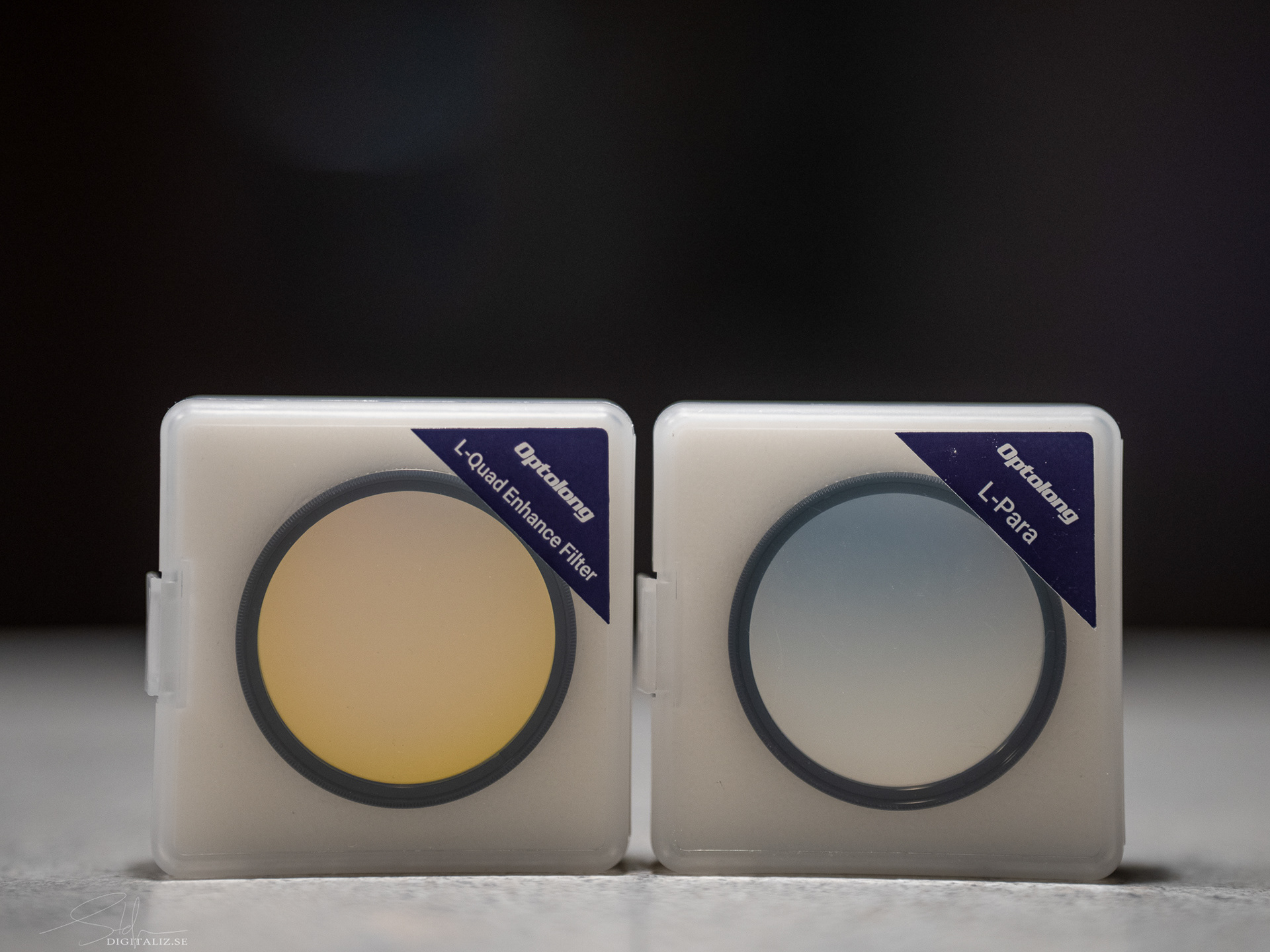
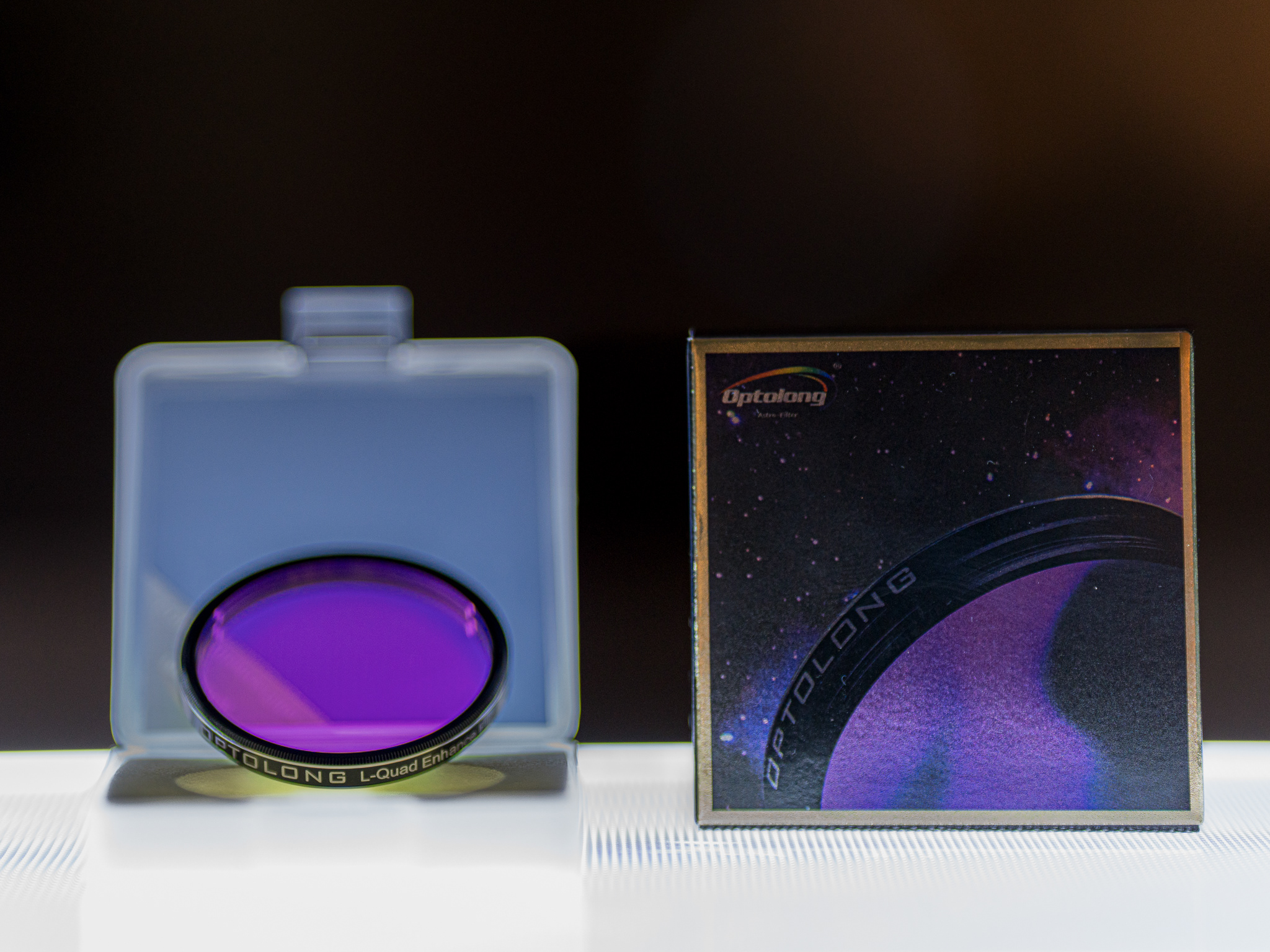
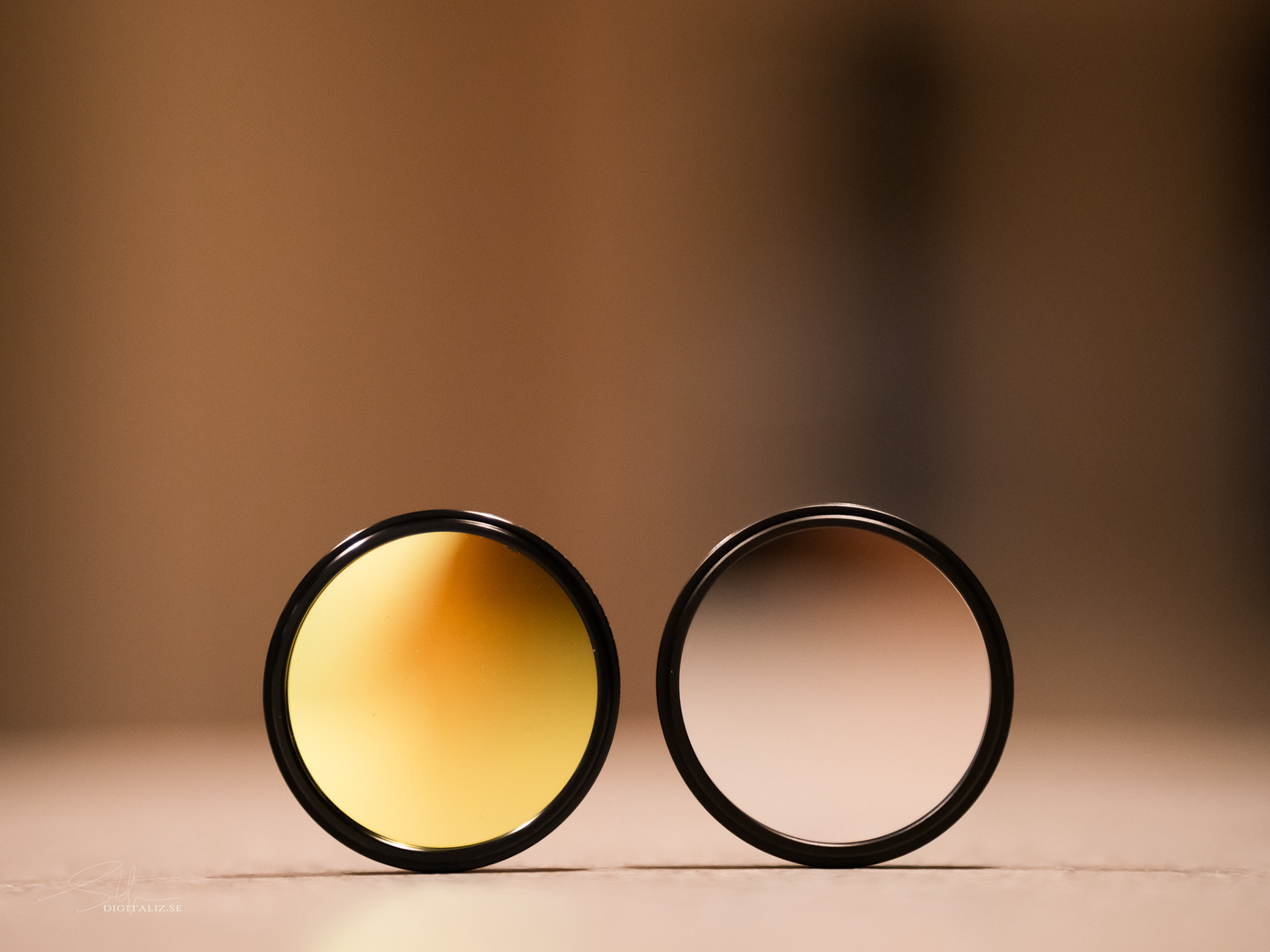
Initially, I assumed that the SV220 3 nm was essentially a direct clone of the Optolong L-Ultimate, both in concept and execution. However, once the two filters were placed side by side, it became immediately obvious that this assumption was incorrect. The coatings of the filters are visually quite different: the Optolong L-Ultimate shows a characteristic golden reflection, while the SVBony filter exhibits a more pinkish hue. While coating color alone does not define performance, it often reflects differences in coating stack design, materials, and optimization targets.
This visual difference turned out to be consistent with what later became apparent when analyzing the published transmission spectra and, more importantly, when evaluating real-world imaging results. Rather than being a simple copy, the SVBony SV220 3 nm follows a distinct design philosophy with noticeable differences in band width control, band placement, and out-of-band suppression.
The filter was provided by the eBay SVBony brand, and during the course of my testing I was asked whether I could also include a comparison against their older 7 nm version. In parallel, I reached out to Cindy Liu from SVBony’s marketing department to ask if I could additionally test their Oiii/Sii dual-band filter. This resulted in a comparison that includes three filters from SVBony alongside one reference filter from Optolong. At the time of publication, I have not yet completed an image using this filter. Persistent and unusually heavy cloud coverage in Sweden has made further imaging impossible during this season.
To make the test even more relevant, I already knew that the filters would be evaluated on the SV555, a fast refractor. With that in mind, I decided to include the Optolong L-Para as well - a filter I had deliberately chosen for use with faster optical systems. This allowed the comparison to go beyond a simple brand-versus-brand evaluation and instead focus on how different design philosophies perform when paired with modern fast optics.
Expectations vs Reality
Given its 3 nm specification, expectations for the SV220 were naturally high. In theory, a narrower bandpass should provide stronger background suppression, higher contrast, and improved performance under light-polluted skies. However, extremely narrow dual-band filters also place higher demands on optical systems, filter alignment, and transmission stability—especially when used with faster telescopes.
What became clear during testing is that the SV220 3 nm is not simply a “more aggressive” than the 7 nm version. Instead, it appears to be optimized with a slightly different balance between suppression, transmission efficiency, and real-world usability. This distinction is important, because chasing the narrowest possible bandpass does not automatically result in better images if other factors—such as band shift or uneven transmission—come into play.
Comparing the SVBony 3 nm and 7 nm versions highlights two fundamentally different approaches to dual-band imaging. The 7 nm version is clearly designed with robustness and versatility in mind. Its wider passbands are more forgiving when used with fast optical systems and are less sensitive to angle-of-incidence effects. This makes it a safer choice for users with f/4–f/5 systems or those who want consistent results across different telescopes without carefully tuning their setup.
The 3 nm version, on the other hand, aims for maximum background suppression and contrast. Under suitable conditions, it can deliver a darker background and stronger isolation of emission nebulae. However, this comes at the cost of increased sensitivity to optical speed, tilt, and band shift. As a result, the 3 nm filter demands more from both the imaging system and the user.
Neither approach is inherently better; they are simply optimized for different priorities. The choice between 3 nm and 7 nm should therefore be guided by optical speed, sky conditions, and tolerance for setup sensitivity rather than marketing specifications alone.
Fast Optical Systems and Band Shift
One of the most critical aspects of this comparison, especially relevant today, is filter behavior in fast optical systems. Modern astrophotography increasingly relies on fast refractors and astrographs, where light hits the filter at steeper angles. This can cause a shift in the effective passband, particularly for very narrow filters.
Based on both spectral analysis and imaging results, it is clear that band shift plays a more significant role with the 3 nm filter than with the 7 nm version or the L-Para. This does not mean the SV220 3 nm performs poorly, but rather that its performance envelope is narrower. In fast systems, even small shifts can partially clip the Ha or Oiii lines, reducing effective transmission and offsetting the theoretical advantage of the narrower bandpass.
In contrast, wider-band filters are generally more forgiving in this regard, maintaining more stable transmission across a wider range of focal ratios. This stability can translate into more predictable results, especially for users who image with multiple systems or frequently change configurations.
Summary
What ultimately stands out is that the SVBony SV220 3 nm is not a budget clone of the Optolong L-Ultimate, but a filter with its own strengths, compromises, and intended use case. The differences in coatings, spectral shape, and system sensitivity all point to a deliberate design choice rather than a copycat approach.
The SV220 3 nm rewards careful system matching and controlled conditions, while the 7 nm version prioritize consistency and ease of use. Understanding these differences is crucial when deciding which filter best suits a given imaging setup and observing environment.
Disclaimer:
The SNR of the real-world stack is measured across the full image circle of a full-frame sensor. Results and conclusions may differ when using smaller sensors, such as APS-C or below.
The Breakdown
Optolong L-Ultimate vs SVBony 3 nm
Laboratory Transmission Results
Laboratory Transmission Results
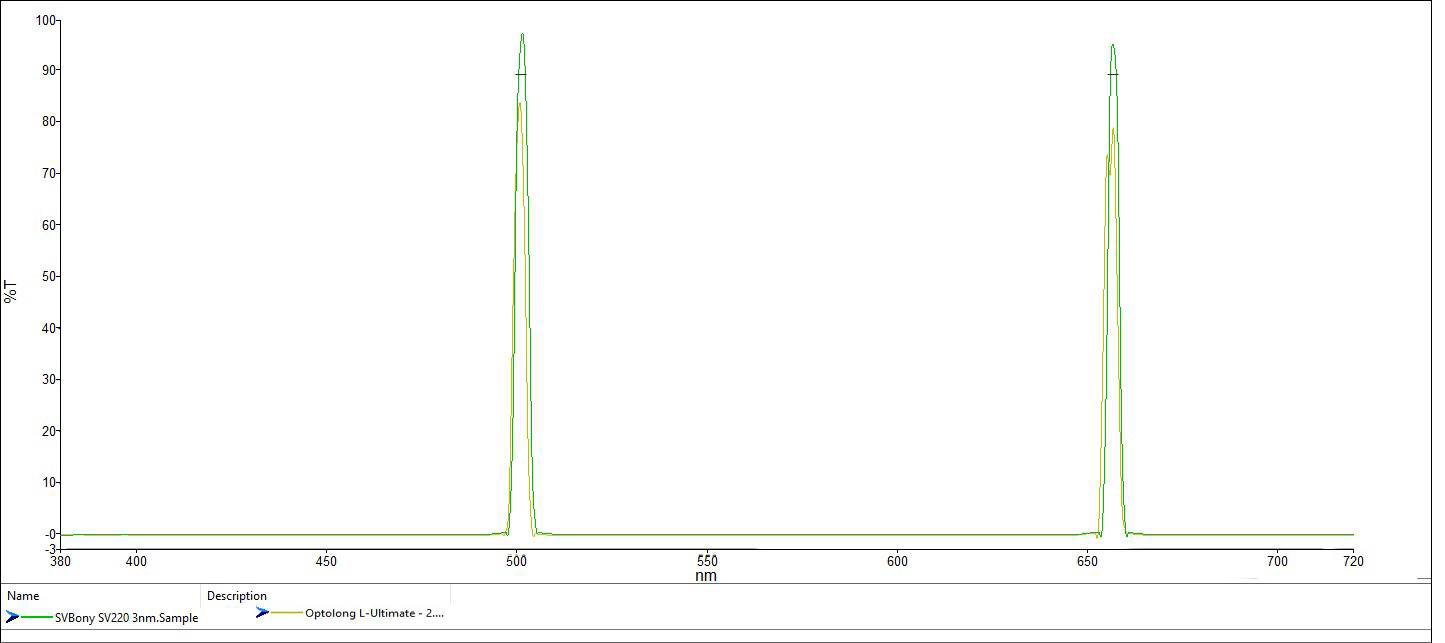
I conducted a detailed laboratory transmission analysis of the SVBony SV220 3 nm dual-band narrowband filter and compared it directly against its main competitor, the Optolong L-Ultimate. The measurements were performed using a laboratory-grade spectrophotometric setup to evaluate peak transmission, band placement, and effective bandwidth for both the Ha and Oiii emission lines.
Measured Transmission Results
SVBony SV220 (green trace)
Oiii peak: ≈ 509.3 nm, ~96.7% transmission
FWHM: ≈ 3.78 nm
Ha peak: ≈ 658.0 nm, ~94.5% transmission
FWHM: ≈ 3.02 nm
Optolong L-Ultimate (yellow trace)
Oiii peak: ≈ 508.5 nm, ~82.4% transmission
FWHM: ≈ 3.28 nm
Ha peak: ≈ 658.0 nm, ~77.2% transmission
FWHM: ≈ 3.78 nm
Both filters are centered at nearly identical wavelengths for the Ha and Oiii emission lines. However, the SVBony SV220 shows significantly higher peak transmission at both lines, reaching approximately 94–97%, compared to approximately 77–82% for the Optolong L-Ultimate.
The measured full width at half maximum (FWHM) values fall within the expected range for 3 nm–class dual narrowband filters, spanning roughly 3.0 to 3.8 nm. Only minor differences are observed between the Ha and Oiii passbands, which is typical for filters of this design.
Measurement Methodology
All spectrophotometric measurements were performed using a PerkinElmer Lambda 25 UV/VIS spectrometer, operated in transmittance mode. The scan parameters were set to a 1 nm sampling interval and a scan speed of 120 nm/min. This setup provides sufficient spectral resolution and repeatability for narrowband filter characterization.
Note on the Optolong L-Ultimate Transmission Results
Due to the unexpectedly low peak transmission measured for the Optolong L-Ultimate, I contacted Optolong for clarification but have not yet received a response. The filter shows no visible signs of physical damage, coating degradation, or contamination. I still haven't heard from them.
To rule out measurement error, the test was repeated three times, including a fresh zero calibration before each run. All measurements produced consistent results, confirming that the reduced transmission originates from the filter itself rather than from any instrumental or procedural issue.
Laboratory grade spectrum of SV220 3nm and L-Ultimate
SVBony SV220 3 nm vs 7 nm
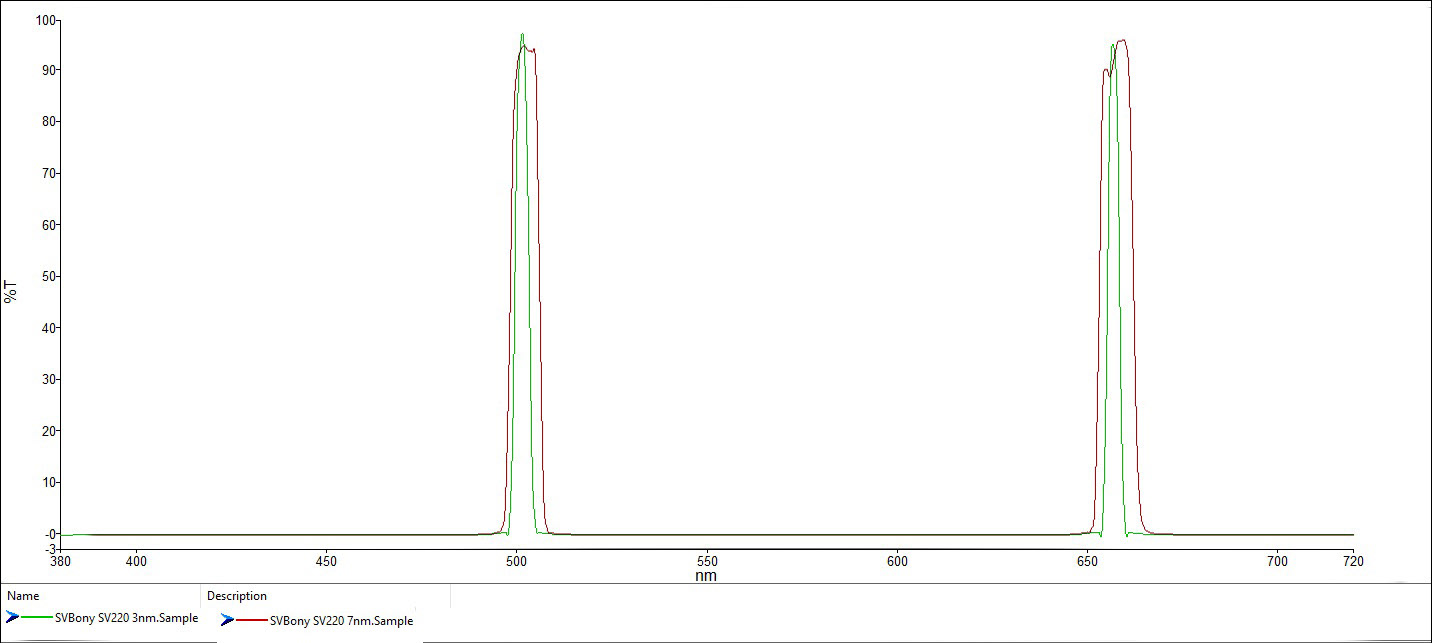
I also performed a detailed laboratory transmission analysis of the SVBony SV220 3 nm dual-band filter and compared it directly with its older 7 nm version. The purpose of this comparison was to evaluate how the two filters differ not only in nominal bandwidth, but also in band placement, peak transmission, and overall design intent.
SVBony SV220 3 nm (green trace)
Oiii peak: ≈ 501.0 nm, ~96.7% transmission
FWHM: ≈ 3.1 nm
Ha peak: ≈ 656.4 nm, ~94.5% transmission
FWHM: ≈ 3.0 nm
SVBony SV220 7 nm (purple trace)
Oiii peak: ≈ 500.8 nm, ~94.8% transmission
FWHM: ≈ 6.9 nm
Ha peak: ≈ 656.6 nm, ~94.6% transmission
FWHM: ≈ 6.8 nm
Laboratory grade spectrum of SVBony SV220 3 nm and 7 nm
Both filters are accurately centered on the Oiii and Ha emission lines, indicating good manufacturing consistency and proper band placement in both versions. Peak transmission is high for both filters, with only a small difference between the 3 nm and 7 nm models, demonstrating that the narrower filter does not sacrifice throughput in pursuit of bandwidth reduction.
As expected, the 3 nm version provides significantly stronger background suppression due to its genuinely narrow passbands, making it well suited for high-contrast imaging under light-polluted skies. The 7 nm version, on the other hand, trades some background suppression for increased robustness. Its wider bandpasses are more forgiving in fast optical systems and less sensitive to angle-of-incidence effects, making it a safer and more versatile option for users with very fast refractors or mixed imaging setups.
This comparison highlights that the two SV220 filters are not simply “narrow” and “less narrow” versions of the same product, but rather represent two different design philosophies optimized for different imaging priorities.
Practical Takeaway — Which One Should You Choose?
I would choose the SVBony SV220 3 nm if your primary goal is maximum contrast and background suppression, especially under light-polluted skies. It is best suited for well-corrected systems and users who are comfortable optimizing focus, tilt, and exposure settings. When matched with an appropriate optical system, the 3 nm version delivers cleaner backgrounds and stronger emission-line isolation.
Choose the SVBony SV220 7 nm if you value robustness and consistency across a wider range of optical setups. Its broader passbands make it more forgiving in fast systems and less sensitive to band shift, tilt, and angle-of-incidence effects. While background suppression is slightly reduced compared to the 3 nm version, it often provides more predictable results, particularly with very fast refractors or mixed imaging configurations.
In short, the 3 nm version prioritizes maximum suppression, while the 7 nm version prioritizes usability and stability. The better choice depends less on specifications and more on how well the filter matches your telescope and imaging conditions.
SVBony SV220 Oiii/Sii (7 nm)
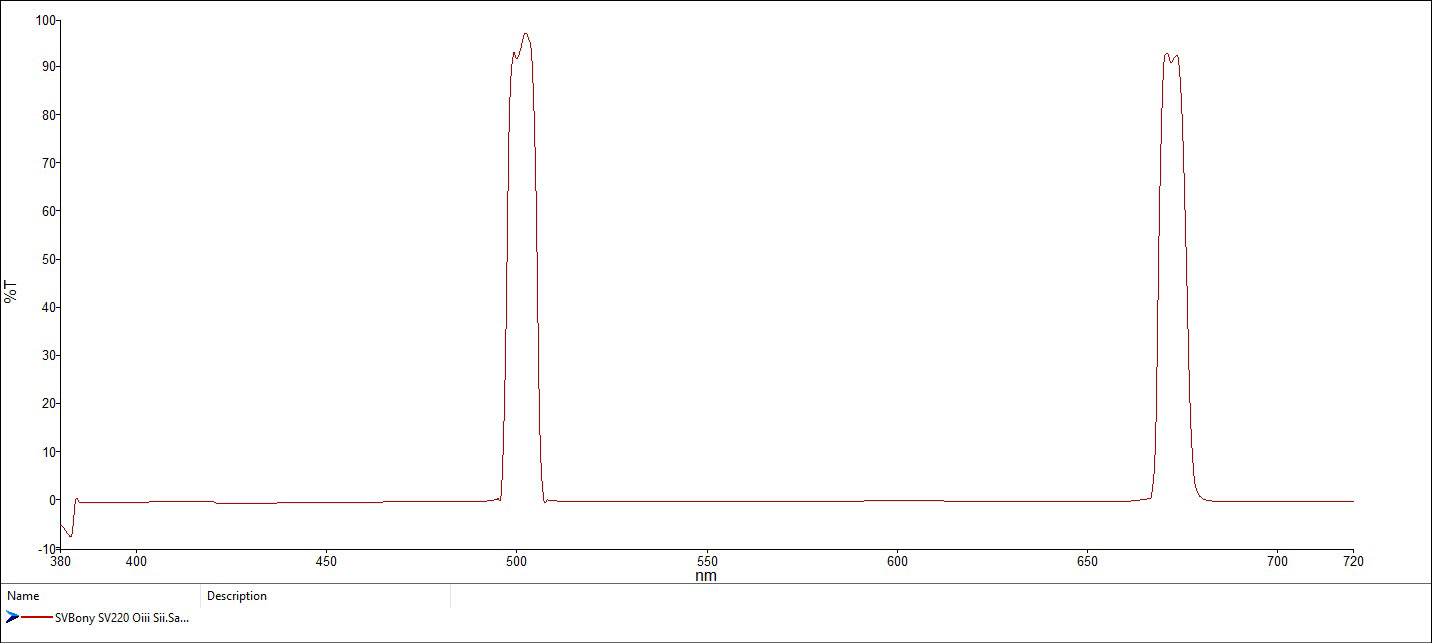
And heres the laboratory transmission analysis of the SVBony SV220 Oiii/Sii dual-band filter to evaluate band placement, peak transmission.
Laboratory grade spectrum of SVBony SV220 Oiii/Sii (7 nm)
As with the previous SV220 filters, the measured results closely match the stated specifications, which continues to reflect well on SVBony’s manufacturing consistency and quality control.
Measured transmission results:
Oiii peak: ≈ 501.2 nm, ~96.5% transmission
FWHM: ≈ 7.0 nm
Sii peak: ≈ 672.4 nm, ~92.5% transmission
FWHM: ≈ 6.9 nm
Both passbands are accurately centered on their respective emission lines and show high peak transmission with well-controlled bandwidths.
Field test
This review is mostly about the SVBony SV220 filter set, so I thought it would be appropriate to test it on my only refractor from SVBony, the SV555.
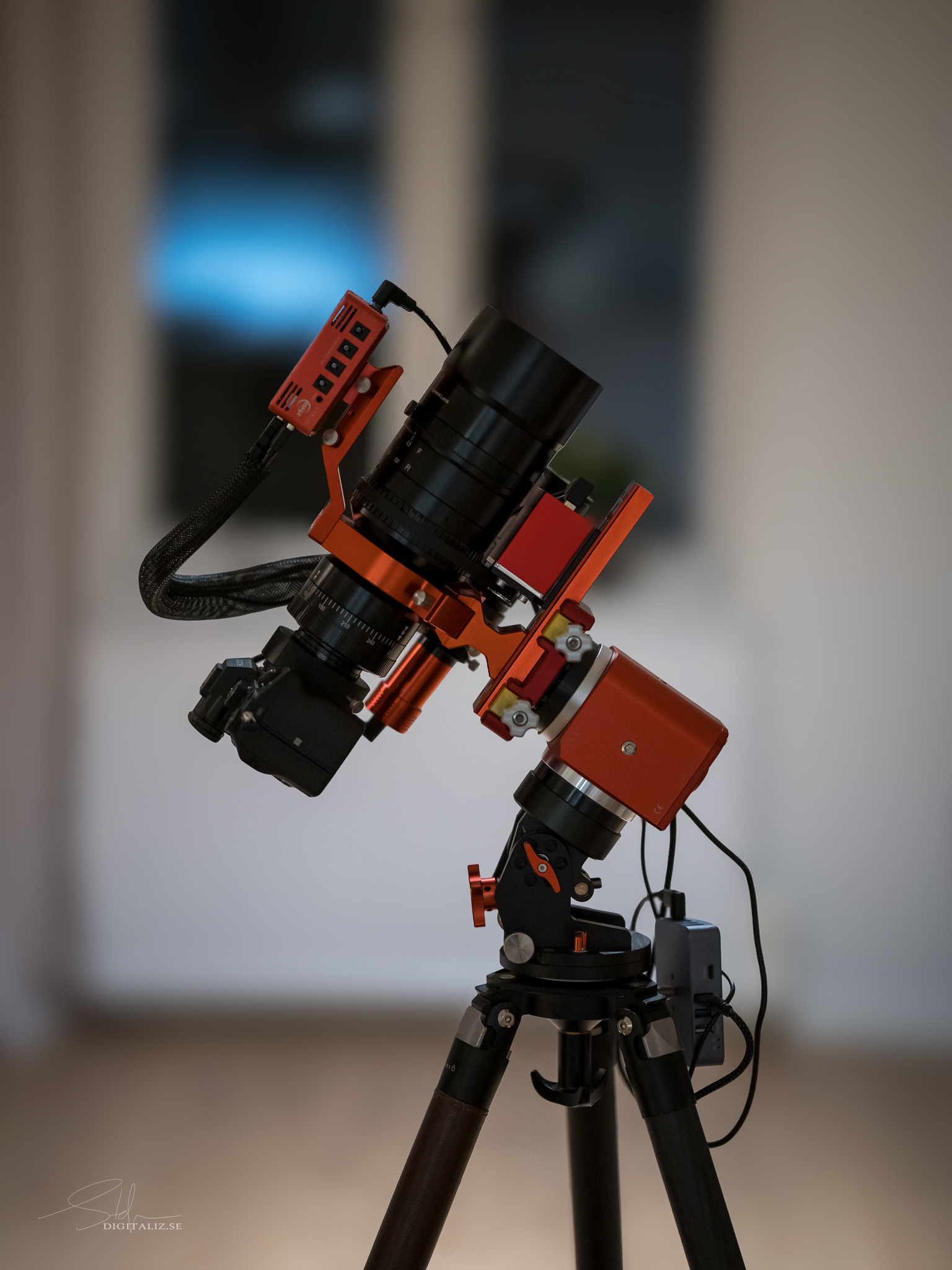
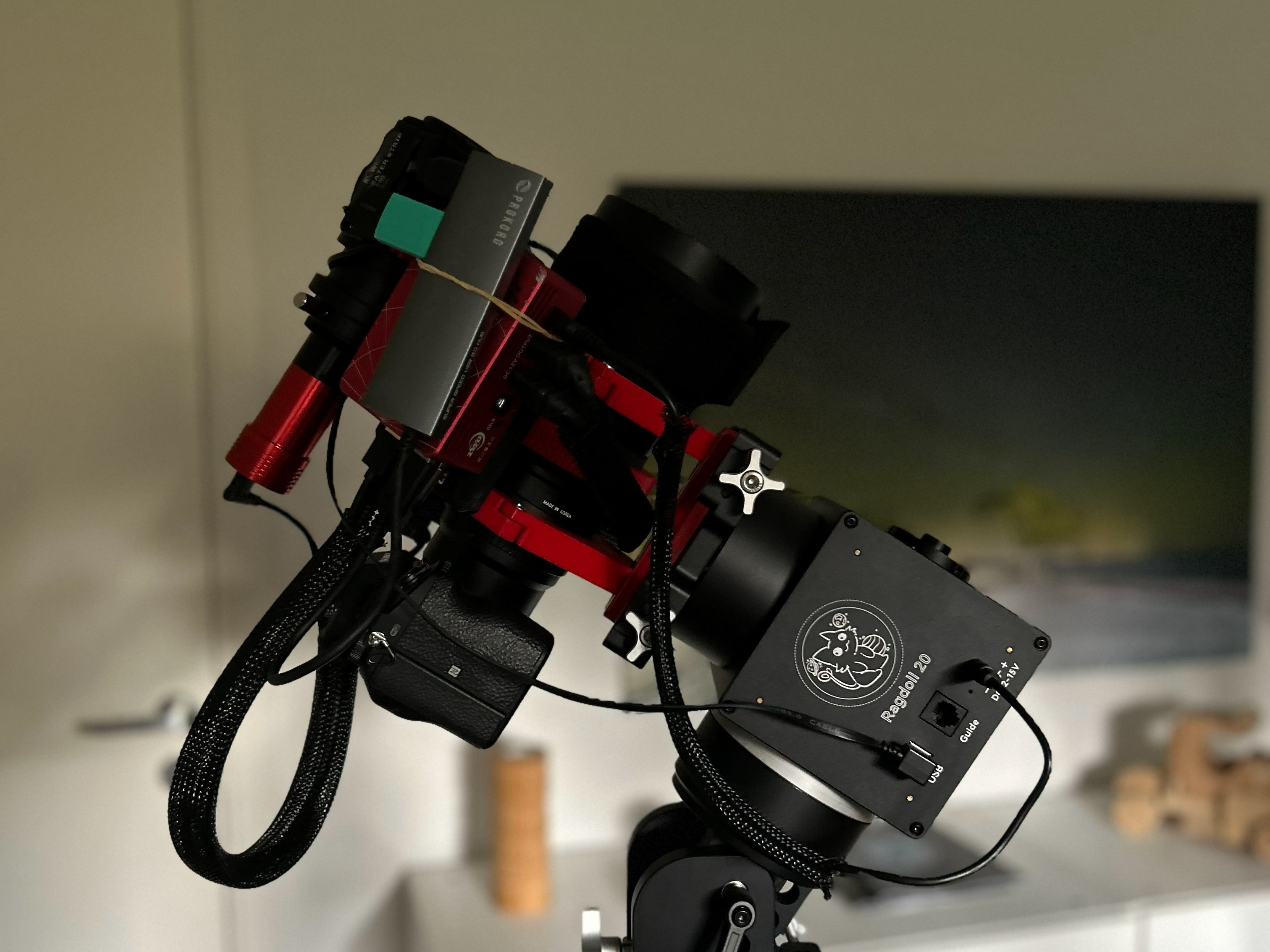
The SVBony SV555 paired with a full-frame Sony A7III camera, mounted on the Juwei-14 harmonic drive
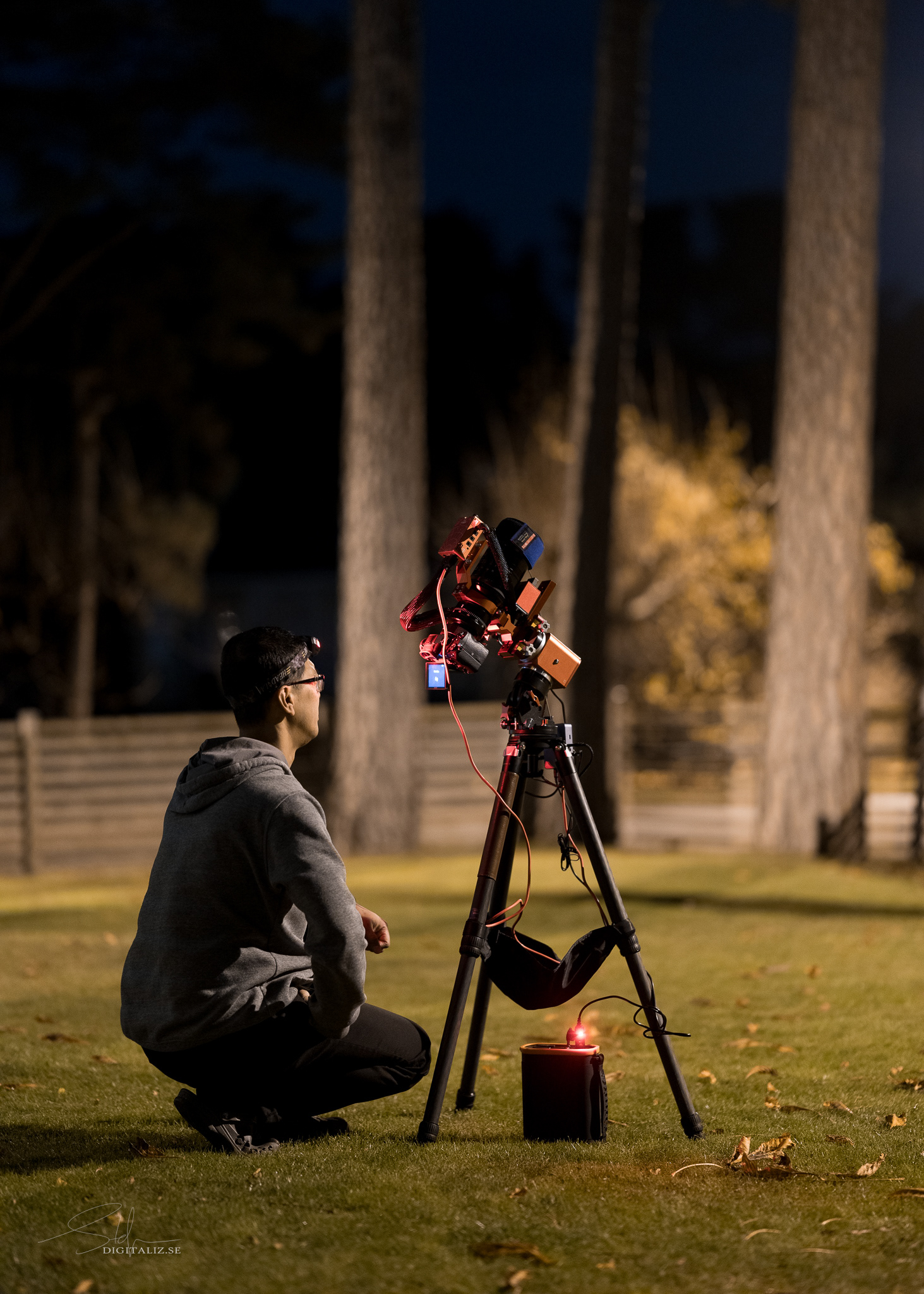
Welcome to my Bortle 5/6 sky in Sweden
The SV555 is a fast refractor with a relatively wide field of view. When I purchased the telescope, I also needed to select suitable filters, and with a focal ratio of f/4.5, this required some careful consideration. Fast optical systems are more prone to bandpass shift, an effect that becomes increasingly severe at lower f-ratios - most notably in very fast systems such as RASA telescopes operating around f/2. For this reason, filters specifically optimized for fast optics are often recommended.
Since this rig was intended to be my super-light and price-concious imaging system, I was looking for a reasonably priced filter that would still function well on a fast refractor. Ideally, it should also perform adequately on my Samyang 135 mm f/2 lens, which places even higher demands on bandpass stability.
After extensive research, I ultimately chose the Optolong L-Para, a 10 nm dual-band filter designed with fast systems in mind. While it is not a perfect solution in every respect, it represented a sensible compromise between performance and cost and, importantly, it fit my budget.
To better understand the limitations and expected behavior, I calculated the effective bandpass shift using the DeepSkyDetail bandpass shift calculator. These calculations confirmed that, although some shift is unavoidable at fast focal ratios, the wider 10 nm passbands of the L-Para remain sufficiently tolerant to retain useful transmission on both the SV555 and the Samyang 135 mm lens. This made the L-Para a practical baseline filter and a relevant reference point for the SV220 comparisons that follow.
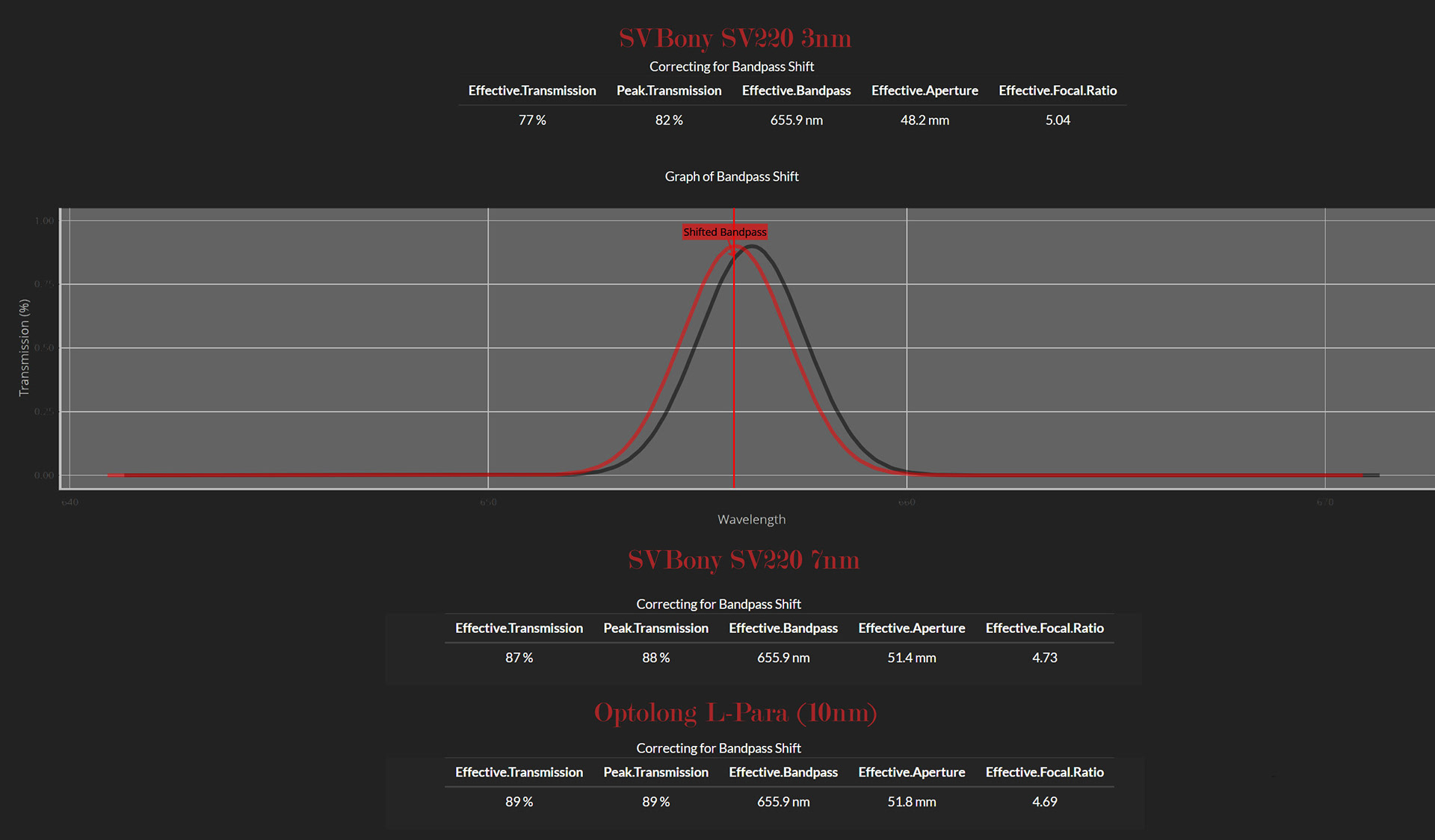
Calculations made from: https://deepskydetail.shinyapps.io/Bandpass_Shift_Calculator/
Bandpass Shift in Fast Optical Systems
The results clearly illustrate how bandwidth plays a critical role in tolerance to this effect.
For the SVBony SV220 3 nm, the calculator shows a noticeable reduction in effective transmission once bandpass shift is taken into account. While the nominal peak transmission is high, the effective transmission drops to around 77%, indicating that part of the narrow passband no longer fully overlaps the emission line at fast focal ratios. This does not mean the filter performs poorly, but it does highlight that very narrow filters are more sensitive to optical speed and require careful system matching.
The SVBony SV220 7 nm performs more robustly under the same conditions. With its wider passband, the effective transmission remains higher at approximately 87%, and the emission line remains well within the usable portion of the filter. This increased tolerance makes the 7 nm version less sensitive to focal ratio, tilt, and angle-of-incidence effects.
As expected, the Optolong L-Para (10 nm) shows the highest tolerance to bandpass shift. Its wider bandpass maintains an effective transmission close to 89%, confirming why filters in this bandwidth range are often recommended for fast refractors and camera lenses.
These results reinforce an important point: narrower is not always better, especially in fast systems. While a 3 nm filter can deliver superior background suppression under ideal conditions, its performance envelope is narrower. Wider filters, such as 7 nm or 10 nm designs, sacrifice some suppression in exchange for greater stability and predictability.
In the context of the SV555 and other fast optical systems, this analysis helps explain why wider dual-band filters often produce more consistent real-world results, even if their specifications appear less impressive on paper.
The key takeaway is that effective transmission in fast systems depends more on usable bandwidth than on nominal peak transmission alone.
The key takeaway is that effective transmission in fast systems depends more on usable bandwidth than on nominal peak transmission alone.
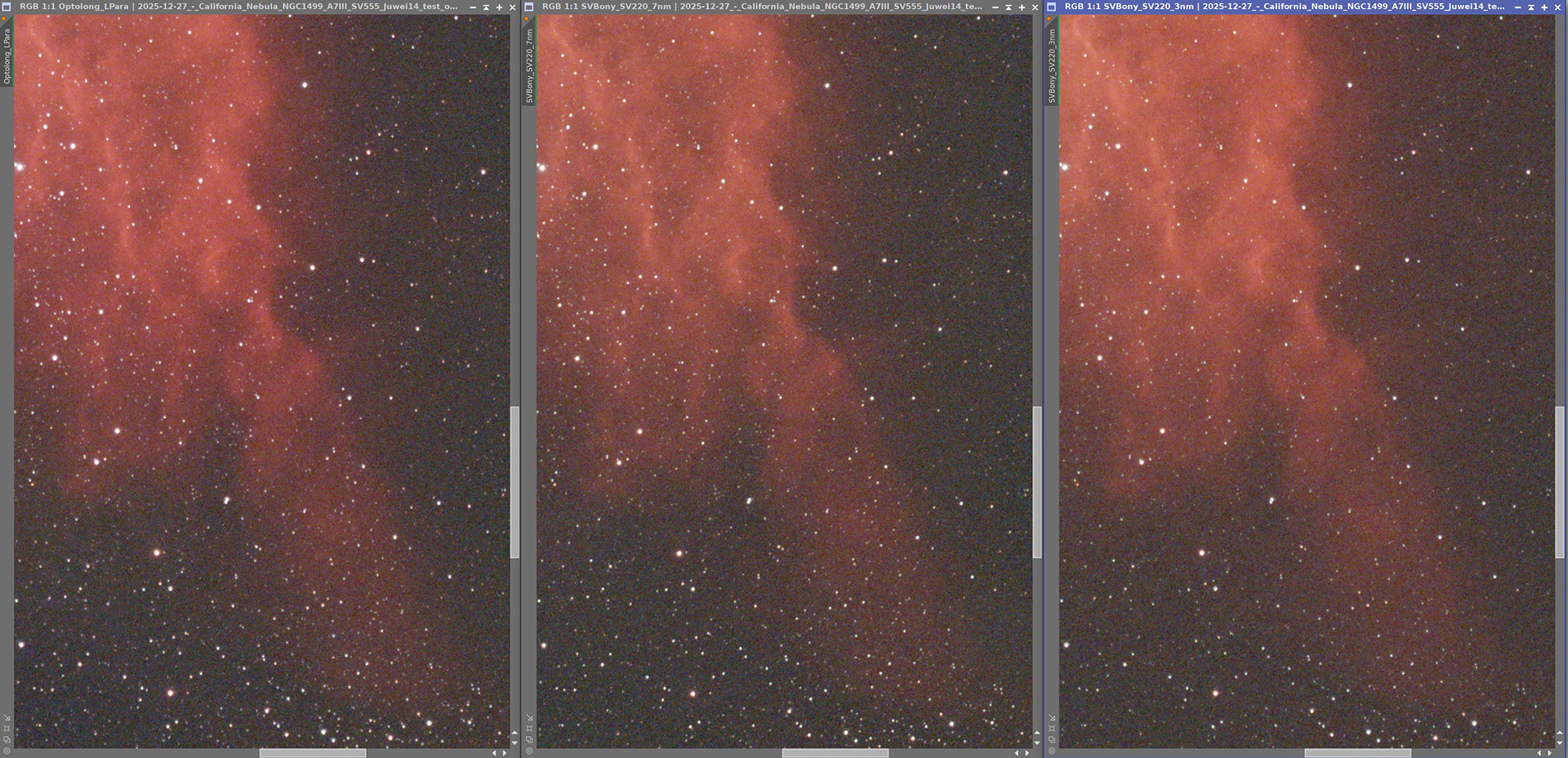
To the left: L-Para Center: SV220 7 nm Right: SV220 3 nm
The auto-stretched image of the California Nebula shown above appears to display stronger Ha signal when using the Optolong L-Para, with the weakest signal coming from the SVBony SV220 3 nm. At the same time, the background noise seems lowest in the 3 nm image and highest in the L-Para data. For this reason, visual inspection alone is insufficient when comparing filters with different bandwidths. A mathematical analysis of signal and background statistics provides a more reliable basis for comparison.
However, this impression is based solely on an automatic stretch. As we all know, auto-stretching can be misleading and visual perception is easily deceived by differences in background levels and contrast. To move beyond subjective interpretation, the next step is to analyze the data mathematically, using measurable signal and noise metrics rather than visual appearance alone.
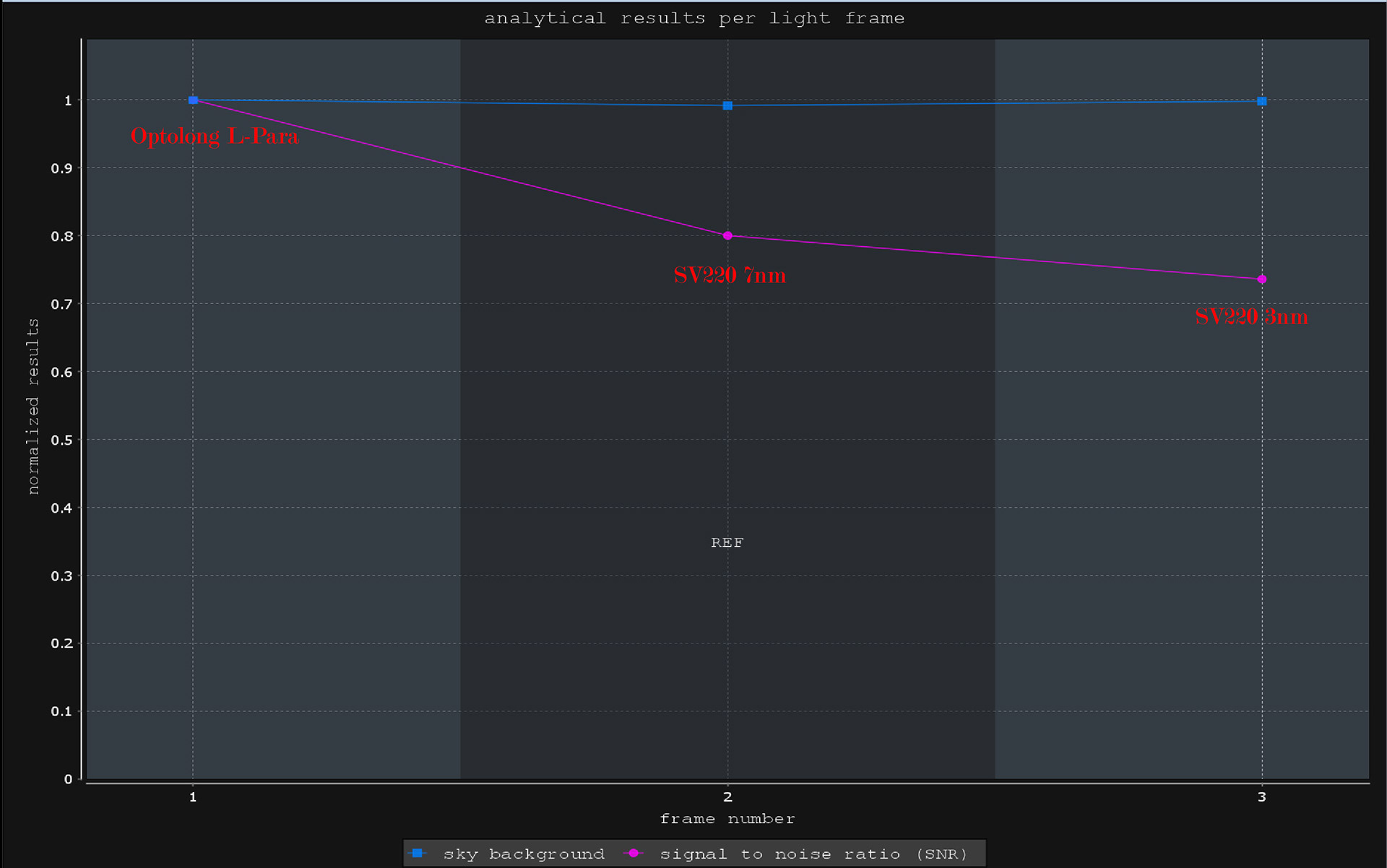
Mathematical analyzes using AstroPixelProcessor
Quantitative analysis using AstroPixelProcessor confirms the theoretical expectations derived from bandpass-shift modeling - a 10 nm dual‑band filter delivers more signal than a 7 nm filter, which in turn outperforms a 3 nm filter. The noise level are about the same. This result reflects bandwidth tolerance in fast systems, not absolute filter quality.
Conclusion
Based on both laboratory measurements and practical considerations, the SV220 series represents a clear step forward from “budget” dual-band filters. The differences between the 3 nm and 7 nm versions are not marketing-driven, but reflect distinct and deliberate design choices. Viewed as a system-dependent tool rather than a universal solution, the SV220 filter set represents a mature and technically competent design that rewards informed use.
Who is the SV220 3 nm best suited for?
Who is the SV220 3 nm best suited for?
* Users imaging under heavy light pollution
* Well-corrected systems at f/5 and slower
* Projects where maximum background suppression is prioritized over flexibility
Who is better served by the 7 nm or L-Para?
* Fast refractors and camera lenses
* Users who want predictable behavior across multiple systems
* Budget-conscious setups that rely on longer integration time rather than extreme filtering
Final image
During the testing period, I only managed to image a single target. However, I was able to collect more than 20 hours of data, of which the image shown below represents a total integration time of 14 hours. Unfortunately, no Sii data is included, as persistent cloud coverage here in Sweden prevented further acquisition during the test window. I will publish the remaining results once conditions allow for additional imaging.
As a brief spoiler, I have since switched to the Samyang 135 mm f/2 lens and plan to image using the SV220 Oiii/Ha and Oiii/Sii filter (7 nm). I am imaging the Spaghetti Nebula, which is a challengeng object. This setup is far from ideal for such a narrow dual-band filter, but any loss in transmission can be compensated for with increased integration time. In narrowband imaging, more data often matters more than theoretical efficiency, and this approach will allow for a practical evaluation of the filter under demanding conditions.

California Nebula – NGC1499
This is my final image captured with an astro-modified Sony A7III before it went to its new owner. It was actually the second modified A7III I’ve owned, and I had this camera for less than half a year.
This version represents the combined result of all the data I collected using the Optolong L-Para and the SVBony SV220 in both 3 nm and 7 nm versions. I’ve compared these filters head-to-head, and the results strongly support the theory of bandpass shift.
In terms of signal-to-noise ratio, the L-Para comes out on top, followed by the SVBony SV220 7 nm, with the 3 nm version placing last. However, this result does not in any way imply that the L-Para is the best filter choice overall—each filter has its own strengths and is better suited to different optics, targets, and imaging conditions.
This version represents the combined result of all the data I collected using the Optolong L-Para and the SVBony SV220 in both 3 nm and 7 nm versions. I’ve compared these filters head-to-head, and the results strongly support the theory of bandpass shift.
In terms of signal-to-noise ratio, the L-Para comes out on top, followed by the SVBony SV220 7 nm, with the 3 nm version placing last. However, this result does not in any way imply that the L-Para is the best filter choice overall—each filter has its own strengths and is better suited to different optics, targets, and imaging conditions.